
Carbon Molecular Sieve for Parker Nitrogen Generation Systems
Carbon Molecular Sieve for Parker PSA Nitrogen Generation
Carbon Molecular Sieve is the adsorption medium used in PSA nitrogen generators. It removes oxygen, moisture, and carbon dioxide from compressed air under pressure, allowing nitrogen to pass through as the product gas. During depressurization, the bed releases the adsorbed components and resets for the next cycle.
Parker PSA nitrogen generators, including NITROSource, DB Series, Domnick Hunter, MAXIGAS, MIDIGAS, and Balston, all use Carbon Molecular Sieve(CMS) as their primary adsorption medium. When CMS reaches the end of its service life or performance declines due to contamination, SorbiTech provides technical support to help you select the appropriate replacement grade based on vessel configuration and nitrogen purity requirements.
Why CMS Matters in Parker PSA Nitrogen Generators
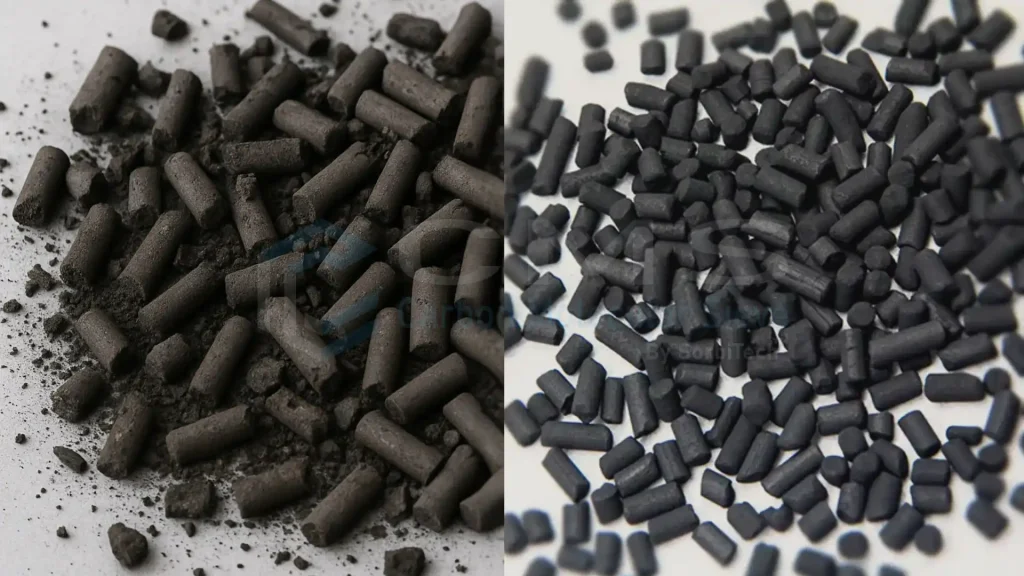
Parker PSA systems operate in continuous cycles, alternating between two adsorption vessels to ensure uninterrupted nitrogen production. Consistent CMS performance in each cycle maintains stable nitrogen purity. If CMS performance declines, oxygen levels in the product gas increase, which is immediately indicated by the system’s oxygen analyzer.
Oil carry over from the compressed air supply is the leading cause of CMS performance decline in Parker systems. When oil reaches the CMS bed, it blocks the pores that separate oxygen from nitrogen. That damage is permanent, and the bed cannot be reversed through regeneration. Excess moisture above the system’s dew point limit can also impair performance, though usually to a lesser extent.
In both cases, replacing the CMS is the only way to restore the system to its rated purity. Maintaining a clean and dry compressed air supply is the most effective way to protect the CMS bed and extend its service life.
CMS Grades Compatible with Parker PSA Systems
SorbiTech provides four CMS grades compatible with the purity range of Parker PSA nitrogen generators. Each grade is available in 1.2 mm, 1.5 mm, and 1.8 mm pellet sizes to accommodate various vessel configurations and loading needs.
CMS 260L is designed for medium flow nitrogen generation in general industrial applications. It is a practical option for Parker systems where standard nitrogen purity is sufficient, such as food packaging, pipeline purging, and related uses.
CMS 350KT is suited for larger scale nitrogen generation with fast adsorption rates. It supports purity levels up to 99.99%, depending on system configuration and operating conditions, and is commonly used in Parker systems for oil and gas, heat treatment, beverage, and chemical processing.
CMS 420KT is engineered for demanding industrial environments that require consistent high purity nitrogen. Its pellet design ensures stable bed packing and uniform flow distribution, reducing pressure drop and minimizing channelling in Parker adsorption vessels.
CMS 450HP is designed for advanced nitrogen generation applications where high purity is required. It is suited to Parker configurations serving laboratory, analytical, and other precision settings where trace oxygen levels must be minimized.
Selecting the appropriate grade for a Parker system depends on target purity, vessel dimensions, and adsorption cycle parameters. SorbiTech’s technical team can assist in identifying a suitable option based on those details.
CMS Loading and Bed Configuration in Parker PSA Vessels
How CMS is loaded into a Parker adsorption vessel matters as much as which grade is selected. If the bed is not filled evenly, gas can take easier paths through parts of the vessel, bypassing sections of the CMS. This is known as channelling, and when it occurs, not all the oxygen gets adsorbed, which results in lower purity even with good quality CMS in place.
SorbiTech recommends the Snowstorm filling (SSF) method for loading CMS into Parker PSA vessels. This controlled filling technique distributes the pellets evenly as they settle, producing a uniform bed density from top to bottom. It reduces void spaces, supports consistent gas flow through the bed, and helps the CMS perform as expected from the first cycle after loading.
Compression pads (CFL) are used with CMS to stabilize the bed during operation. Because Parker PSA systems cycle under pressure, proper stabilization prevents pellet shifting or uneven compaction. Compression pads apply gentle, consistent pressure to keep the bed settled throughout its service life.
Sizing, Calculation and Performance Support
Determining the correct CMS quantity for a Parker adsorption vessel depends on the vessel’s internal dimensions and the required fill density for the chosen grade. SorbiTech includes sizing and quantity calculations in the supply process, ensuring operators and maintenance teams have the necessary information before ordering.
Full technical documentation, including Technical Data Sheets and Safety Data Sheets, is available for each CMS grade. Performance guarantees on adsorption efficiency and service life are included, and the technical team is available to support grade selection, loading questions, and any follow-up after commissioning.
To discuss CMS options for your Parker PSA nitrogen generator, contact SorbiTech with your system details and nitrogen purity target.
CMS For PSA Nitrogen Generator
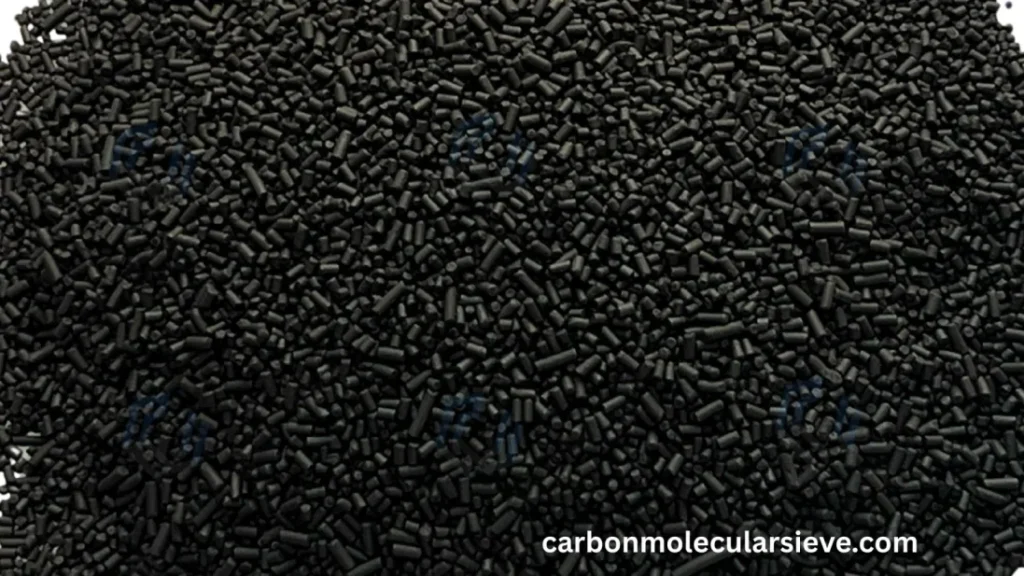
CMS Carbon Molecular Sieve is developed for nitrogen separation from compressed air via Pressure Swing Adsorption (PSA) systems.
Type
Carbon Molecular SieveShape
Pellets
Requests
Download