
CMS Adsorbent for Atlas Copco NGP and NGP+ Nitrogen Generators
How CMS Works Inside Atlas Copco NGP and NGP+ Generators
Atlas Copco NGP and NGP+ nitrogen generators use Pressure Swing Adsorption to separate nitrogen from compressed air. At the heart of this process is Carbon Molecular Sieve, a carbonaceous adsorbent packed into two pressure vessels that alternate between adsorption and regeneration.
During adsorption, oxygen molecules are trapped in the CMS pores while nitrogen passes through as the product gas. When one vessel is saturated, the system switches to the other, enabling uninterrupted nitrogen production.
The NGP+ includes a feed air monitoring system that checks the quality of incoming air and diverts off-spec air before it reaches the CMS bed. Atlas Copco built this protection into the system because the CMS is the most critical component in the process.
When and Why CMS Needs Attention in Atlas Copco Systems
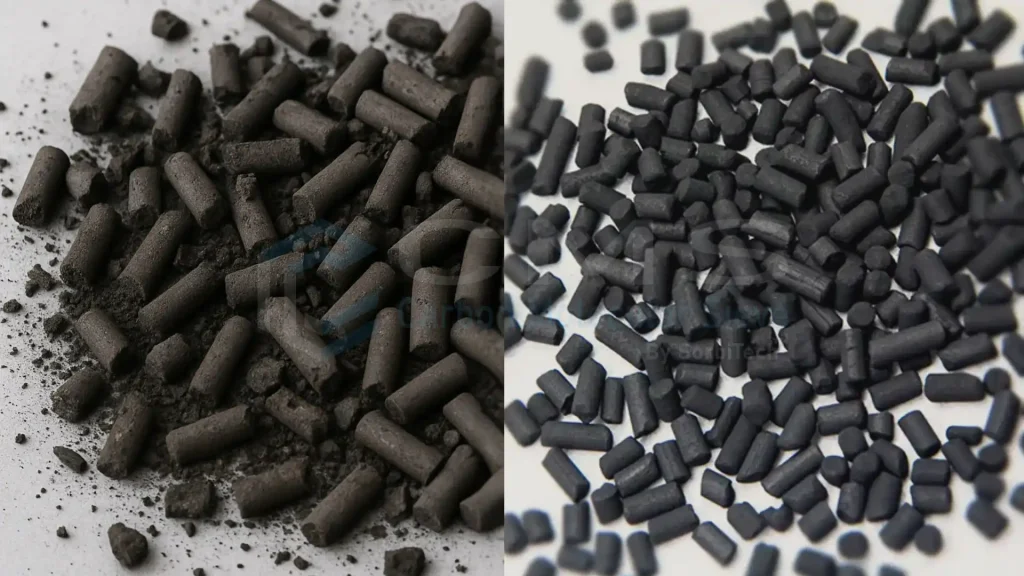
Under normal conditions, the CMS in an NGP or NGP+ has a long service life. Over time, its adsorption capacity decreases. Some factors can accelerate this decline. Identifying early signs allows operators to address issues before purity is affected.
The most visible sign is a slow drift in outlet nitrogen purity. On NGP+ units, the application protection system automatically flushes off spec nitrogen. If that flushing occurs more frequently than usual, the CMS bed warrants a closer look.
Oil carryover from the compressed air supply is the leading cause of early CMS failure, as even small amounts can permanently block pores. Excess moisture above the dew point limit has a similar impact. In both cases, replacement is required to restore rated purity.
CMS Grades for Atlas Copco NGP and NGP+ Systems
Atlas Copco NGP and NGP+ generators provide nitrogen purity from 95% to 99.999%, spanning multiple CMS grades. The appropriate grade depends on target purity, vessel size, and system cycle parameters.
CMS 260L is intended for medium flow nitrogen generation at standard industrial purity. It is suitable for NGP systems in food packaging, pipeline blanketing, and general industrial uses where cost effective purity is required.
CMS 350KT supports purity levels up to 99.99%, depending on system configuration. Its rapid adsorption characteristics make it a practical fit for NGP and NGP+ units used in heat treatment, laser cutting, and beverage production.
CMS 420KT is designed for NGP+ systems that require consistently high-purity nitrogen. Its pellet design ensures stable bed packing and uniform flow, supporting reliable long-term performance.
All three grades are available in 1.2 mm, 1.5 mm, and 1.8 mm pellet sizes to match the specific vessel configuration of the Atlas Copco system.
Finding the Right CMS for Your Atlas Copco NGP System
When an NGP or NGP+ operator identifies a purity drop or plans a CMS bed replacement, the priority is to secure a compatible grade in the required quantity. This process begins by confirming the generator model, vessel dimensions, and target purity.
Using this information, the appropriate CMS grade is selected, and the required quantity is calculated based on vessel dimensions and fill density. carbonmolecularsieve.com, operated by SorbiTech, reviews each configuration individually before recommending a CMS option.
Technical Data Sheets and Safety Data Sheets are available for each grade. Guidance on the Snowstorm Filling method is also provided to ensure uniform bed density in Atlas Copco adsorption vessels.
CMS Supply and Technical Support for Atlas Copco Operators
Proper loading is as important as grade selection. The Snowstorm Filling method ensures even distribution of CMS pellets, resulting in consistent bed density and reduced void spaces. This supports predictable gas flow from the first cycle.
Compression pads stabilize the bed during repeated pressure cycles. Without them, pellets may shift, causing uneven flow and reduced separation efficiency. When used with proper loading, they help maintain consistent CMS performance throughout their service life.
For more information on selecting the right CMS for your Atlas Copco PSA system, Contact Us today to discuss your requirements and receive expert guidance. Our team is ready to assist you in optimizing your PSA nitrogen production with high performance CMS solutions.
CMS For PSA Nitrogen Generator
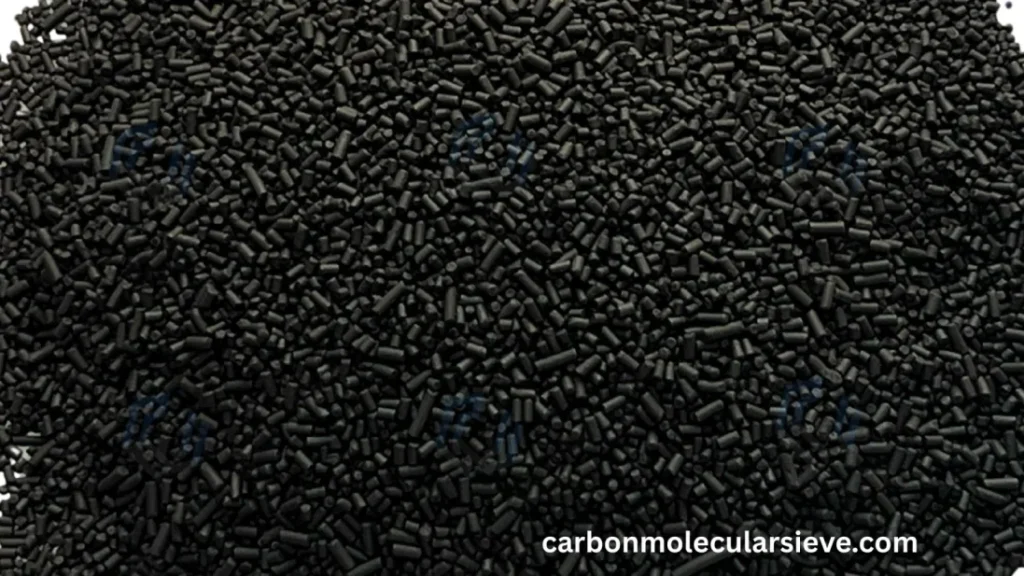
CMS Carbon Molecular Sieve is developed for nitrogen separation from compressed air via Pressure Swing Adsorption (PSA) systems.
Type
Carbon Molecular SieveShape
Pellets
Requests
Download