Carbon Molecular Sieve Market: Trends & Outlook
This is a comprehensive analysis of the global CMS (CMS) market, covering its size and forecast, segmentation, regional structure, competitive landscape and the dynamics shaping demand through the decade. It draws on published market research and on the engineering economics that ultimately decide where value is created. CMS is the adsorbent at the core of Pressure Swing Adsorption systems, and its market is being carried upward by the global shift to on site gas generation.
Market Size and Forecast
The global Carbon Molecular Sieve market is estimated at around one billion US dollars, and it is expanding at roughly 5 to 7 percent a year, on a path toward the region of one and a half billion dollars by the early 2030s. The segment tied to complete nitrogen generator systems is larger and grows faster, because it also captures the equipment and service built around the adsorbent.
What gives the market its resilience is that two demand streams feed it at the same time. New installations require an initial adsorbent charge, while the growing installed base generates recurring replacement demand as beds age. Because those replacement volumes accumulate on top of every new system sold, the market follows a compounding rather than a cyclical path.

Market Segmentation
By Product Form
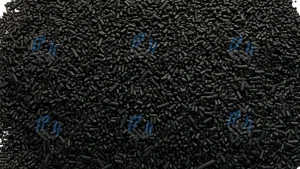
By form the market divides into pelletised, granular and powdered CMS. Pelletised material dominates, because most PSA columns are packed with uniform pellets, typically 1.0 to 1.6 millimetres in diameter, that give predictable flow and low dust. Powdered and granular grades serve specialised reactor designs and smaller processes.
By Application
By application, gas separation is the largest and fastest growing segment, and within it nitrogen generation is the anchor. CMS is also used for hydrogen purification, natural gas and biogas upgrading, and oxygen enrichment through PSA, vacuum PSA and membrane routes.

| Application | How CMS is used | Market position |
|---|---|---|
| Nitrogen generation | PSA and vacuum PSA for on site N2 | Anchor of the market |
| Hydrogen purification | PSA cleanup of reformer and electrolyser gas | Fastest emerging |
| Natural gas and biogas | Upgrading and purification by PSA and membrane | Growing with biomethane |
| Oxygen enrichment | PSA and membrane routes | Niche, stable |
By End Use Industry
Demand spans chemical processing, oil and gas, petrochemicals, power generation, water treatment, pharmaceuticals, food and beverage, electronics and aerospace. Nitrogen generation for inerting, blanketing and packaging accounts for the bulk of consumption, which is why segments such as food packaging and electronics feature heavily in demand.
Regional Analysis
Asia Pacific
Asia Pacific holds the largest share, contributing more than a third of global revenue, and is also the fastest growing region at around 5.7 percent, led by China. China is the largest producing region as well, accounting for roughly 60 percent of global output, concentrated in commodity grades.
North America
North America combines strong industrial demand with a fast emerging hydrogen agenda. The Inflation Reduction Act directed more than 1.7 billion US dollars into hydrogen demonstration projects and finalised clean hydrogen production tax credits in early 2025, accelerating adoption of CMS based purification.
Europe and the Middle East
Europe is driven by decarbonisation, with the European Hydrogen Bank channelling close to 1.9 billion euros into low emission gas technologies and biomethane targets of 35 billion cubic metres by 2030 creating fresh pull for CMS in biogas upgrading. The Middle East and Gulf is a rising demand centre for on site nitrogen, a region SorbiTech Group supplies directly, including Saudi Arabia.

Competitive Landscape
The supply side is moderately concentrated, with the top five producers holding more than 70 percent of global supply, and it divides broadly into two tiers. A large volume base, centred in China, supplies commodity grades that make up the majority of global tonnage and compete mainly on price. A smaller pool of high performance capacity holds the technology lead in high performance grades and competes on consistency and recovery. For buyers this split is the practical point, because the lowest priced material is rarely the lowest cost over a bed’s service life, which is where consistent, quality controlled supply earns its place.

| Commodity grades | High performance grades | |
|---|---|---|
| Competes on | Price | Consistency and recovery |
| Best suited to | Lower purity, high volume | High purity, long bed life |
| Main buyer risk | Variable quality and dust | Higher unit price |
Market Dynamics
Drivers
The strongest driver is the substitution of delivered bulk gas by on site generation, which is cheaper and more reliable for continuous users. Growth in gas separation demand, tighter environmental regulation and the drive for energy efficient processes all reinforce it, while the emerging hydrogen economy has become a second engine, since PSA hydrogen purification depends on carbon and other adsorbents.
Restraints
The main restraints are the high cost and complexity of manufacturing consistent, high performance CMS, and intense price competition from commodity producers, which compresses margins at the lower end of the market.
Opportunities
The clearest opportunities lie in hydrogen purification, biogas and biomethane upgrading, and continued industrialisation in emerging markets, each of which widens the addressable base well beyond traditional nitrogen generation.
The Economics That Govern Value
Beneath the market figures sits one engineering relationship that decides where value concentrates. Nitrogen recovery falls as target purity rises, from around 50 percent at 99 percent purity to below 30 percent near 99.999 percent, and because compressed air is the dominant operating cost, higher purity roughly doubles the energy per unit of product. A higher performing CMS recovers more nitrogen at a given purity, so at high purity it repays its higher cost through a smaller compressor and lower energy. This is why market value migrates toward high performance grades faster than volume, and why high purity segments reward quality most.

Market Outlook
The outlook is one of steady structural growth rather than a boom, most likely in the 5 to 7 percent range for the core market and faster for the equipment attached and hydrogen linked segments. Value will keep shifting toward high purity, high recovery grades. Consistent quality, a full grade range and application engineering will separate the leaders from commodity suppliers as buyers move to total cost of ownership decisions.
Conclusion
The Carbon Molecular Sieve market is a growing, moderately concentrated sector underpinned by the shift to on site gas generation and, increasingly, by the hydrogen economy. For both suppliers and buyers, the decisive factors are quality, grade range and the economics of recovery and purity, not headline price. SorbiTech Group is a leading supplier of stock ready Carbon Molecular Sieve, held in every grade for fast dispatch worldwide. For grade selection or technical specifications, contact SorbiTech Group.
Contact US
Related Topics
How to Solve CMS Ash/Dust Emission in PSA Nitrogen Generators?
Compression pads (CFL) for Stabilizing the Carbon Molecular Sieve Bed
Optimize CMS Filling in Nitrogen Generators using Snowstorm Filling
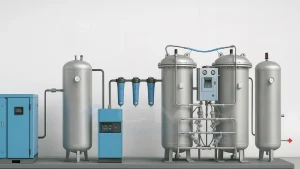
Nitrogen Generation by Pressure Swing Adsorption (PSA)

How Can We Maintain and Load CMS in Nitrogen Generators